ALICE ROOSEVELT WAS HARDCORE. “She was known as a rule-breaker in an era when women were under great pressure to conform. The American public noticed many of her exploits. She smoked cigarettes in public, swore at officials, rode in cars with men, stayed out late partying, kept a pet snake named Emily Spinach (Emily as in her spinster aunt and Spinach for its green color) in the White House, and was seen placing bets with a bookie.
So what I’m reading here is, she was a Roosevelt?
Well I have a new hero.
Her whole wikipedia article is gold
“When her father was governor of New York, he and his wife proposed that Alice attend a conservative school for girls in New York City. Pulling out all the stops, Alice wrote, ‘If you send me I will humiliate you. I will do something that will shame you. I tell you I will.’”
“Her father took office in 1901 following the assassination of President William McKinley, Jr. in Buffalo (an event that she greeted with “sheer rapture.”)“
“During the cruise to Japan, Alice jumped into the ship’s pool fully clothed, and coaxed a congressman to join her in the water. (Years later Bobby Kennedy would chide her about the incident, saying it was outrageous for the time, to which the by-then-octogenarian Alice replied that it would only have been outrageous had she removed her clothes.”
“She was dressed in a blue wedding dress and dramatically cut the wedding cake with a sword (borrowed from a military aide attending the reception)”
“When it came time for the Roosevelt family to move out of the White House, Alice buried a Voodoo doll of the new First Lady, Nellie Taft, in the front yard.”
“Later, the Taft White House banned her from her former residence—the first but not the last administration to do so. During Woodrow Wilson’s administration (from which she was banned in 1916 for a bawdy joke at Wilson’s expense)…”
“As an example of her attitudes on race, in 1965 her African-American chauffeur and one of her best friends, Turner, was driving Alice to an appointment. During the trip, he pulled out in front of a taxi, and the driver got out and demanded to know of him, “What do you think you’re doing, you black bastard?” Turner took the insult calmly, but Alice did not and told the taxi driver, “He’s taking me to my destination, you white son of a bitch!”
“To Senator Joseph McCarthy, who had jokingly remarked at a party “Here’s my blind date. I am going to call you Alice”, she sarcastically said “Senator McCarthy, you are not going to call me Alice. The trashman and the policeman on my block call me Alice, but you may not.”
In no time the friends were sauntering into the local bank to get a loan for their new business, “wearing jeans, smelling of herbs, and armed with Tupperware containers of Mo’s 36 and Sleepytime blends.” They called their company Celestial Seasonings, after co-founder Lucinda Ziesing’s flowername.
But there might be another reason they named it “celestial.” Mo Siegel and John Hay, two of the founders, were avid believers in a new-age bible called The Urantia Book, which followers call “an epochal revelation authored solely by celestial beings.” The book touches upon everything from mind control to a eugenics plot to eliminate the “inferior races” of our great nation.
it’s hilarious to me when people call historical fashions that men hated oppressive
like in BuzzFeed’s Women Wear Hoop Skirts For A Day While Being Exaggeratedly Bad At Doing Everything In Them video, one woman comments that she’s being “oppressed by the patriarchy.” if you’ve read anything Victorian man ever said about hoop skirts, you know that’s pretty much the exact opposite of the truth
thing is, hoop skirts evolved as liberating garment for women. before them, to achieve roughly conical skirt fullness, they had to wear many layers of petticoats (some stiffened with horsehair braid or other kinds of cord). the cage crinoline made their outfits instantly lighter and easier to move in
it also enabled skirts to get waaaaay bigger. and, as you see in the late 1860s, 1870s, and mid-late 1880s, to take on even less natural shapes. we jokingly call bustles fake butts, but trust me- nobody saw them that way. it was just skirts doing weird, exciting Skirt Things that women had tons of fun with
men, obviously, loathed the whole affair
(1864)
(1850s. gods, if only crinolines were huge enough to keep men from getting too close)
(no date given, but also, this is 100% impossible)
(also undated, but the ruffles make me think 1850s)
it was also something that women of all social classes- maids and society ladies, enslaved women and free women of color -all wore at one point or another. interesting bit of unexpected equalization there
and when bustles came in, guess what? men hated those, too
(1880s)
(probably also 1880s? the ladies are being compared to beetles and snails. in case that was unclear)
(1870s, I think? the bustle itself looks early 1870s but the tight fit of the actual gown looks later)
hoops and bustles weren’t tools of the patriarchy. they were items 1 and 2 on the 19th century’s “Fashion Trends Women Love That Men Hate” lists, with bonus built-in personal space enforcement
Gonna add something as someone who’s worn a lot of period stuff for theatre:
The reason you suck at doing things in a hoop skirt is because you’re not used to doing things in a hoop skirt.
The first time I got in a Colonial-aristocracy dress I felt like I couldn’t breathe. The construction didn’t actually allow me to raise my arms all the way over my head (yes, that’s period-accurate). We had one dresser to every two women, because the only things we could put on ourselves were our tights, shifts, and first crinoline. Someone else had to lace our corsets, slip on our extra crinolines, hold our arms to balance us while a second person actually put the dresses on us like we were dolls, and do up our shoes–which we could not put on ourselves because we needed to be able to balance when the dress went on. My entire costume was almost 40 pounds (I should mention here that many of the dresses were made entirely of upholstery fabric), and I actually did not have the biggest dress in the show.
We wore our costumes for two weeks of rehearsal, which is quite a lot in university theatre. The first night we were all in dress, most of the ladies went propless because we were holding up our skirts to try and get a feel for both balance and where our feet were in comparison to where it looked like they should be. I actually fell off the stage.
By opening night? We were square-dancing in the damn things. We had one scene where our leading man needed to whistle, but he didn’t know how and I was the only one in the cast loud enough to be heard whistling from under the stage, so I was also commando-crawling underneath him at full speed trying to match his stage position–while still in the dress. And petticoats. And corset. Someone took my shoes off for that scene so I could use my toes to propel myself and I laid on a sheet so I wouldn’t get the dress dirty, but that was it–I was going full Solid Snake in a space about 18″ high, wearing a dress that covered me from collarbones to floor and weighed as much as a five-year-old child. And it worked beautifully.
These women knew how to wear these clothes. It’s a lot less “restrictive” when it’s old hat.
I have worn hoop skirts a lot, especially in summer. I still wear hoop skirts if I’m going to be at an event where I will probably be under stage lights. (For example, Vampire Ball.)
I can ride public transportation while wearing them. I can take a taxi while wearing them. I can go on rides at Disneyland while wearing them. Because I’ve practiced wearing them and twisting the rigid-but-flexible skirt bones so I can sit on them and not buffet other people with my skirts.
Hoop skirts are awesome.
Hoop skirts are also air conditioning. If you ever go to reenactments in the South, particularly in summer, you’ll notice a lot of ladies gently swaying in their big 1860s skirts – because it fans all the sweaty bits. You’ll be much cooler in a polished cotton gown with full sleeves, ruffles, and hoopskirt than in a riding jacket and trousers, let me promise you! (This is part of the reason many enslaved women also enthusiastically preferred larger skirts – they had more to do than sit in the shade, but they’d get a bit of a breeze from the hoops’ movement as they were walking.)
They’re also – and I can’t emphasize enough how important this is – really easy to pee in. If you’re in split-crotch drawers (which, until at least the 1890s, you were), you can take an easy promenade a few feet away from the gents and then squat down and pee in pretty much total privacy. It gives so much freedom in travel when it’s not a problem to pee most anywhere.
People also don’t realize that corsets themselves were a HUGE HUGE IMPROVEMENT over previous support-garment styles – and if you have large breasts that don’t naturally float freely above your ribcage (which some people’s do! but it’s not that common), corsets are often an improvement over modern bras.
They hold up the breasts from underneath, taking the weight of them off your back. Most historical corset styles don’t have shoulder straps, so you’re not bearing the weight of your breast there, either, and you can raise your arms as far as your dress’s shoulder line allows (which is the actually restrictive bit – in my 1830s dress, literally all I can do is work in my lap, but in my 1890s dress I can paddle a kayak or draw a longbow with no trouble. Both in a full corset). They support your back and reduce the physical effort it takes to not slouch, helping avoid back pain. They’re rigid enough that you don’t usually have to adjust your clothing to keep it where it belongs. They’re flexible – if you’re having a bloaty PMS day you just … don’t lace it as tightly, and if your back muscles are sore you can lace it a little tighter. And you can undo a cup (or, y’know, not have breast cups) to nurse a baby without losing any of the structural integrity of the garment.
I do educational/historical dressing and people are really insistent, like, “The corset was invented by a man, wasn’t it?” “Actually, women were at the forefront of changing undergarment styles throughout the 19th century!” “But it’s true that it was invented by a man.”
Uh, well, it’s hard to say who “invented” the style but it’s very likely that women’s dressmakers mostly innovated women’s corsets and men’s tailors mostly innovated men’s corsets, honey. Because those exist too.
Also? These fashions are about taking up space. They’re about being loud and visible and saying HERE I AM. About saying “I’m so rich, I need someone to help me dress every morning.” And about saying, “I am not solely here for male consumption”–there’s a reason so many cartoons lampooning women’s fashion are about how hard those ladies are to kiss, and how impossible it’d be to have a quick fuck in them. (Which it actually isn’t, but that’s beside the point)
Historical women’s fashions aren’t 100% unproblematic and absolutely wonderful. They make stark class distinctions incredibly visible, because you simply cannot wear some of these dresses and keep them maintained without a private staff to do a ton of work for you. They upheld a standard of femininity a lot of women were excluded from. They limited women’s and girls’ participation in sports and athletics.
But damn, women wore them for a reason.
I think the only women really endangered by these fashions at the time would be women in service who probably couldn’t have afforded to wear the extremes or wouldn’t be able to due to the practical requirements of their work.
Imagine wearing a crinoline and getting to close to a kitchen fire or open fireplace (and I do know that some women did die like that), or if you fell in the river or something.
I mean, all of this is true, but I do feel like posts like this are missing quite an important part of the discussion, though. In some cases, quite cynically and intentionally, too.
Most of the posters above me have stressed at great length that these fashions are fine as long as you’re used to them, but haven’t actually stopped to consider the implications of that. Becoming accustomed to constriction doesn’t actually take away that constriction – it just means you’ve learned to operate around it. A modern day equivalent would be, I think, high heels. I’m used to wearing high heels. I can even run in high heels. But there’s a reason I don’t run in high heels, and nor do female athletes in the Olympics, and wearing high heels every day of your life leads to horrible foot deformity.
Corsets are another. I’ve noticed an increasing trend in women declaring that there’s nothing at all constrictive about a properly fitted corset and it’s somehow revisionist to claim otherwise, but that is bullshit after a point. A corset creates a very firm wrap around your waist, forcing your breathing up into your chest and away from your lower ribs and diaphram. Even a properly fitted corset will get you out of breath quicker if you try to do a strenuous activity than the same activity would without one.
And hey, there are plenty of banal-seeming examples from the modern day, in fact – women’s clothing is small, and skin-tight, and therefore restricts movement in a whole bunch of ways that we’re all just used to, but it doesn’t change the facts. We are still constrained by our fashions in ways that men aren’t. A man in a t-shirt and baggy jeans can – no other factors withstanding – run and jump into a tree if he wants. A woman wearing a smaller skin-tight top and a pair of fitted jeans can’t, because her clothes won’t let her; even moreso if she’s also in heels.
There’s an interview with Evangeline Lily where she talks about the Wasp costume in Ant Man and the Wasp. She says how male actors kept complaining about how uncomfortable their superhero costumes were, and then when she got hers she was surprised, because it was completely fine. And then Paul Rudd was like “Yeah, but it’s restrictive, and it pinches here, and it’s always a relief to take it off” and that was when she realised that that’s just what clothes are like for women. The reason hers felt fine was because she was used to being restrained by her own clothes. Physical discomfort is the background radiation of a woman’s life; but men’s fashions are primarily about comfort, and so they weren’t used to it.
There are plenty of ways in which makeup, heels, shorter/bigger skirts etc have been sources or symbols of empowerment over the years, sure. That’s still the case today. It’ll still be the case tomorrow, and for a long time to come. But let’s not pretend that there isn’t a major issue – and hasn’t been for a long time – with women having to accept casual discomfort in our fashions that men don’t.
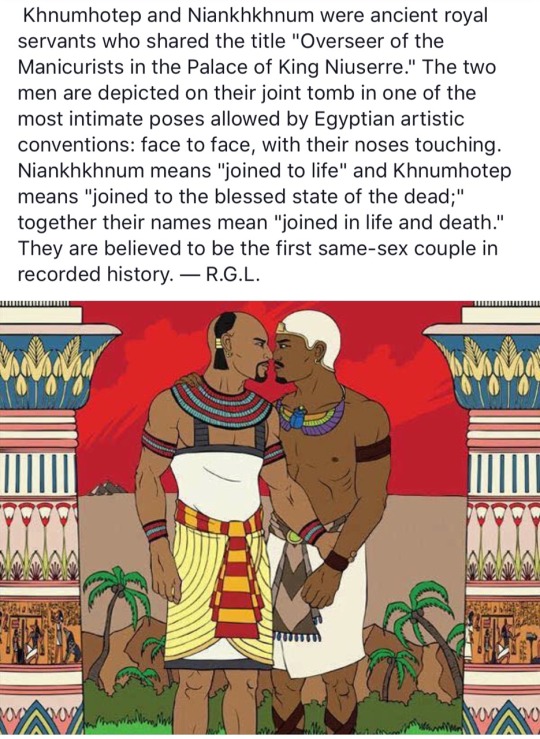
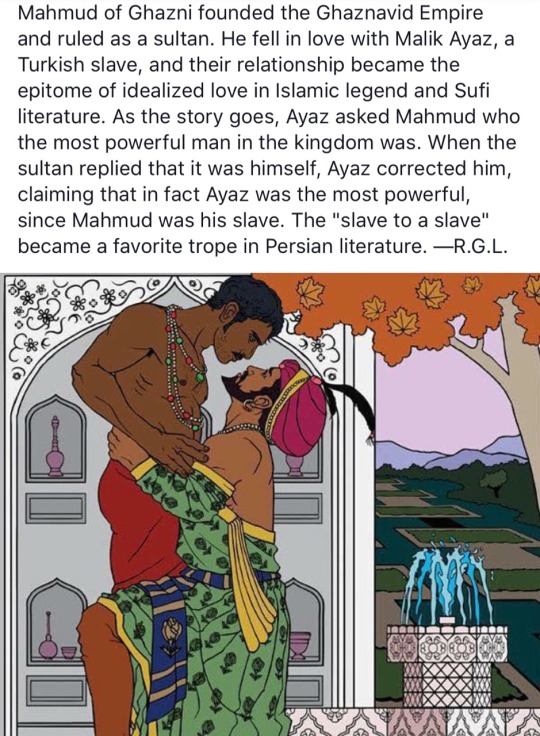
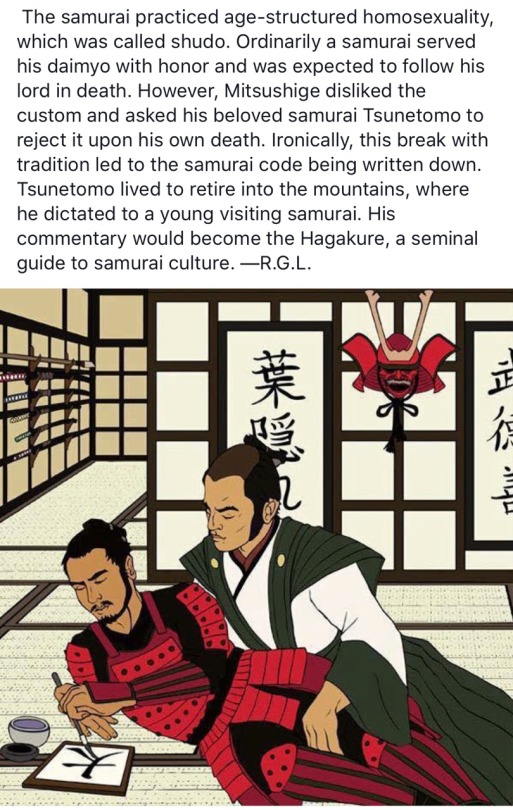
Happy Pride Month Eleanor Roosevelt was queer, the Little Mermaid is a gay love story, James Dean liked men, Emily Dickinson was a lesbian, Nikola Tesla was asexual, Freddie Mercury was bisexual & British Indian, and black trans women pioneered the gay rights movement.
Florence Nightingale was a lesbian, Leonardo da Vinci was gay, Michelangelo too, Jane Austen liked women, Hatshepsut was not cisgender, and Alexander the Great was a power bottom
Freddie Mercury is well known for his attraction to men but was also linked to several women, including Barbara Valentin whom he lived with shortly before he died. Friends have talked about being invited into their bed and walking in on them having sex (documentary Freddie Mercury: The Great Pretender)
Marsha P. Johnson and Sylvia Rivera are two of the best-known activists who fought in the Stonewall riots
it’s sometimes hard to believe rasputin was real. like there’s no non-fucked up part of rasputin’s existence
did he do something problematic i thought he was just russia’s greatest love machine
basic (true) story: fanatical russian monk who has almost never shaved or washed and smells like goats shows up at the russian capital with a creepy look on his beardy face and everyone just assumes he’s a prophet or a saint because he’s got a cult following that believes he can cure illnesses. his stans are sexually obsessed with him and he gets just a fuckton of russian pussy wherever he goes cause apparently he can cure his true believers of illness with god-given dick magic. russia’s queen has him come stay at the palace and sets him up in luxury because she thinks he can cure her son’s haemophilia with the power of russian goat jesus, and they
(allegedly)
become lovers, probably, ‘cause she craves that unwashed goat-scented dick like the rest of his cult which she now
(allegedly)
belongs to.
then the worst assassins in the history of assassinations try to assassinate him, because all of russia is slutshaming the queen he has too much power over the royal family and it’s helping revolutionaries turn people against the royals. so these idiots have him round for tea and cakes which are poisoned with cyanide, but he is magically unaffected by poison they get the dose wrong and he doesn’t die, and then he drinks three glasses of wine, which are also poisoned, and he doesn’t die, so they tell him to look at a crucifix and shoot him in the chest with a revolver when he isn’t looking, and he doesn’t die, but they think he’s dead so one of them dresses in his clothes and gets driven to his apartment to make it look like he’s gone home to hide the crime, and when they come back he gets up and attacks them, so they stab him in the side with a knife, and he doesn’t die, and then he frees himself and runs outside, so they shoot him a few times more, including in the forehead, and they wrap his body up and chuck him in the icy river, and he doesn’t go into the water, so his body is found on the ice the next day. and get this…. he died…. of hypothermia.
additionally, everyone who wasnt in the party of getting rid of rasputin was pretty bummed out when they found him and his miracle dick dead the next day and there was a pretty bangin funeral of which the royal family themselves attended. however after the tsar was overthrown a few month later they exhumed his body and burned it because the new leadership was very adamant about making sure there were no ties left to honor the old monarchy. however this dudes body had never been properly prepped for a cremation which meant that under the extreme heat his tendons and ligaments began to retract and shrink causing his dead body to move and twitch around as if still animate. according to some testimony his body actually sat up straight on the pyre, and at least one spectator fired a gun at the body and another may have allegedly died of shock.
Rasputin was an old god from times before humans
He is like a cleric gone wild
“did rasputin do something problematic” i am going to die
Part of me thinks “Surely this isn’t true” but another part of me is like “This is not the weirdest thing I’ve ever heard”
There’s part of me that can’t possibly believe this is real, bit I’ve read parts of the Old Bailey records, and this is … not exactly normal, but not that far from it. People stole lots of shit, and drunk theater people are a very odd lot.
“Let us steal… a theatre!” – W. Shakespeare, Leverage (1601)


 SpaceAceKaiju Tumblr